WPC vs SPC Flooring: Key Differences & What Maintenance Pros Need to Know
If you’ve been installing or maintaining LVT or LVP for years, you’ve likely already worked with WPC and SPC, whether they were labeled that way or not. These aren’t new products, but they are the terms showing up more often in specs, submittals, and conversations with commercial clients.
One's understanding regarding the technical differences between the product types shows up on the jobsite. Dent resistance, subfloor tolerance, temperature swings, and long-term wear all trace back to whether you’re dealing with WPC or SPC. Choosing the right one can be the difference between a floor that performs and one that leads to callbacks.
Luxury vinyl flooring has evolved quickly over the past decade. While LVT (Luxury Vinyl Tile) and LVP (Luxury Vinyl Plank) describe the look and format, WPC and SPC define how the product actually performs in the field.
What Are WPC and SPC?
WPC (Wood Plastic Composite) and SPC (Stone Plastic Composite) are both types of rigid core luxury vinyl flooring. They fall under the broader LVT/LVP category but are distinguished by their core construction.
· WPC flooring features a core made from a blend of wood fibers, plastic polymers, and foaming agents. This creates a thicker, more cushioned product.
· SPC flooring uses a core composed of limestone powder, polyvinyl chloride (PVC), and stabilizers. The result is a denser, more rigid material.
While both are engineered for durability and water resistance, their structural differences lead to distinct performance characteristics.

Key Differences Between WPC and SPC
WPC (wood plastic or polymer composite) and SPC (stone plastic or polymer composite) are both engineered to meet ASTM F3261 performance standards, meaning they are suitable for demanding residential and commercial environments. ASTM F3261 is the industry standard specification for rigid core luxury vinyl flooring, covering critical performance criteria such as dimensional stability, thickness, locking strength, and overall durability. While they are often referred to interchangeably with LVT and LVP, the key difference lies in their internal construction and not in their appearance.
Both WPC and SPC offer:
· A wide variety of visual designs and patterns
· Inherent waterproof resistance
· Compatibility with modern floating installation systems
Understanding where each excels can help ensure the right product is selected for the right environment.
1. Durability and Rigidity
SPC flooring is significantly denser than WPC, making it more resistant to dents and heavy impacts. This makes SPC an ideal choice for high-traffic environments such as retail spaces, offices, and garages.
WPC, on the other hand, offers more flexibility and a slightly softer feel underfoot. While still durable, it may be more susceptible to indentation under heavy loads.
2. Comfort and Sound
WPC flooring typically provides better comfort and sound absorption due to its thicker, foamed core. This makes it a popular choice in residential settings where underfoot feel and noise reduction are priorities.
SPC flooring is more rigid and can feel harder underfoot, though many products include attached underlayments to improve acoustics.
3. Water Resistance
Both WPC and SPC are marketed as waterproof, and both perform exceptionally well in moisture-prone environments. However, SPC’s dense core makes it less susceptible to expansion and contraction due to temperature changes.
4. Installation Considerations
Both products typically use click-lock floating installation systems. SPC’s rigidity allows it to better bridge minor subfloor imperfections, while WPC may require a slightly smoother substrate for optimal results.
5. Ideal Applications
· WPC: Residential interiors, bedrooms, living areas, and spaces where comfort is a priority
· SPC: Commercial settings, basements, garages, and areas with heavy traffic or temperature fluctuations
Where LVT and LVP Fit In
LVT and LVP are umbrella terms that describe the format and appearance of the tile or plank flooring rather than the internal construction. Both WPC and SPC products are technically LVT/LVP, depending on their design.
As the industry has evolved, WPC and SPC have become the more precise terms used to describe performance characteristics. For contractors, architects, and facility managers, this distinction is increasingly important.
Maintenance and Longevity
Regardless of core type, the performance of any luxury vinyl floor is heavily influenced by its wear layer and surface protection. Over time, even high-quality SPC and WPC floors can show signs of wear, scratching, and loss of finish, especially in high-traffic areas.
Routine cleaning helps, but it doesn’t fully address long-term surface degradation. This is where protective coatings and maintenance systems come into play.
Enhancing WPC and SPC with Floor Finishes
Both WPC and SPC flooring can benefit from the application of a high-performance floor finish. A properly applied coating can:
· Improve scratch and abrasion resistance
· Enhance appearance and gloss consistency
· Simplify ongoing cleaning and maintenance
· Extend the usable life of the flooring
For commercial environments in particular, applying a floor finish can help protect the investment in flooring while reducing lifecycle maintenance costs.
Final Thoughts
WPC and SPC flooring give you two reliable rigid-core options. Choosing the right one comes down to jobsite conditions and performance demands. WPC delivers comfort and sound control. SPC delivers maximum durability, stability, and dent resistance.
Either way, the core is only part of the system. The long-term performance of any floor comes down to how well the surface holds up under real-world traffic, abrasion, and maintenance cycles.
That’s where protection matters.
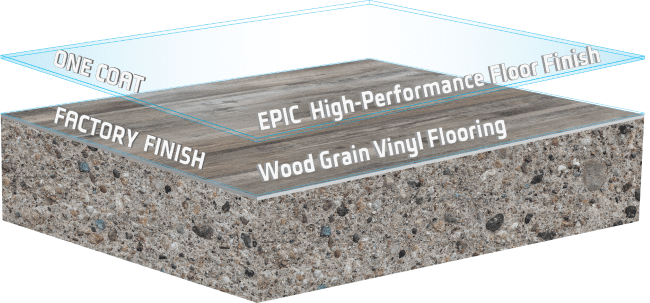
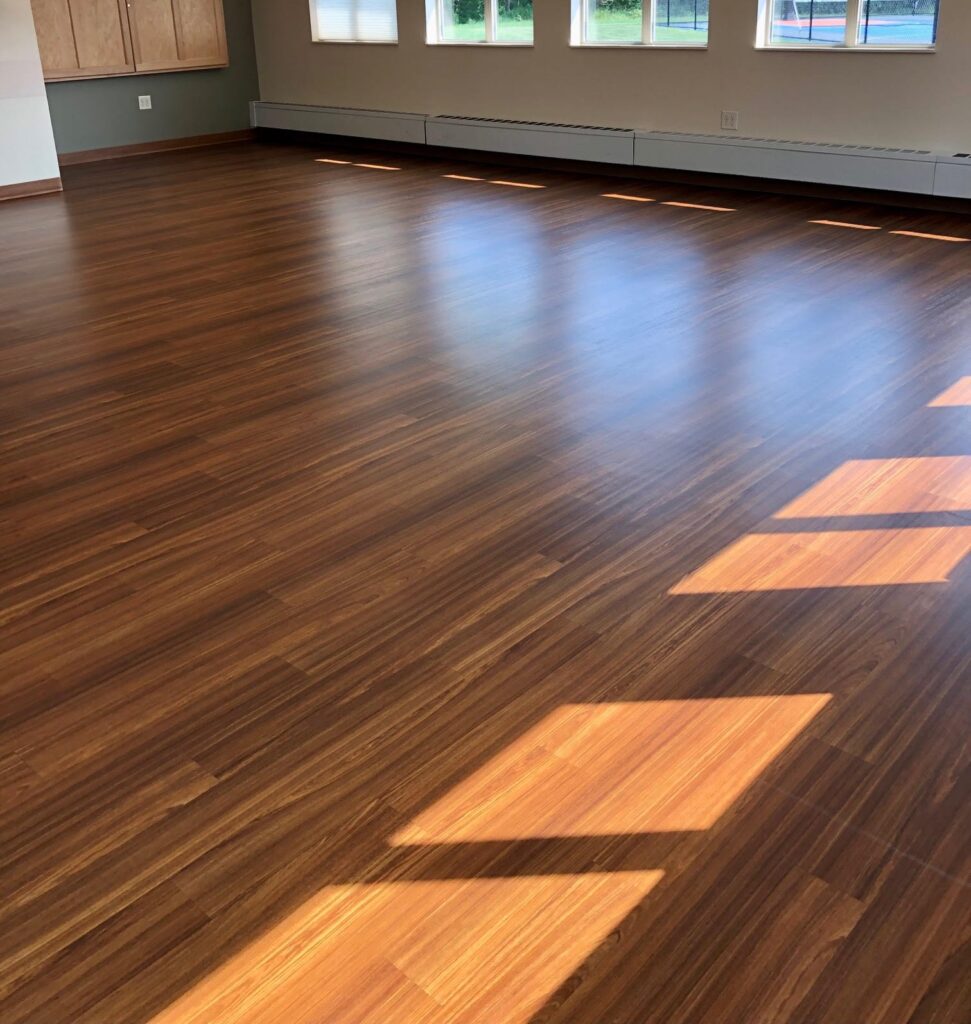
EPIC High-Performance Floor Finish®, UDT’s water-based urethane floor finish, is designed to bond to and protect both WPC and SPC flooring. It adds a durable wear layer that helps reduce scratching, maintain appearance, and simplify ongoing maintenance, especially in high-traffic commercial environments. EPIC is used to enhance the color of flooring that has lost its sheen or luster. EPIC can also be applied to frequently wet environments that require additional traction!
If you’re installing or maintaining WPC or SPC, adding a proven floor finish like EPIC will reduce or eliminate callbacks, extend floor life, and deliver a better end result for your customer.